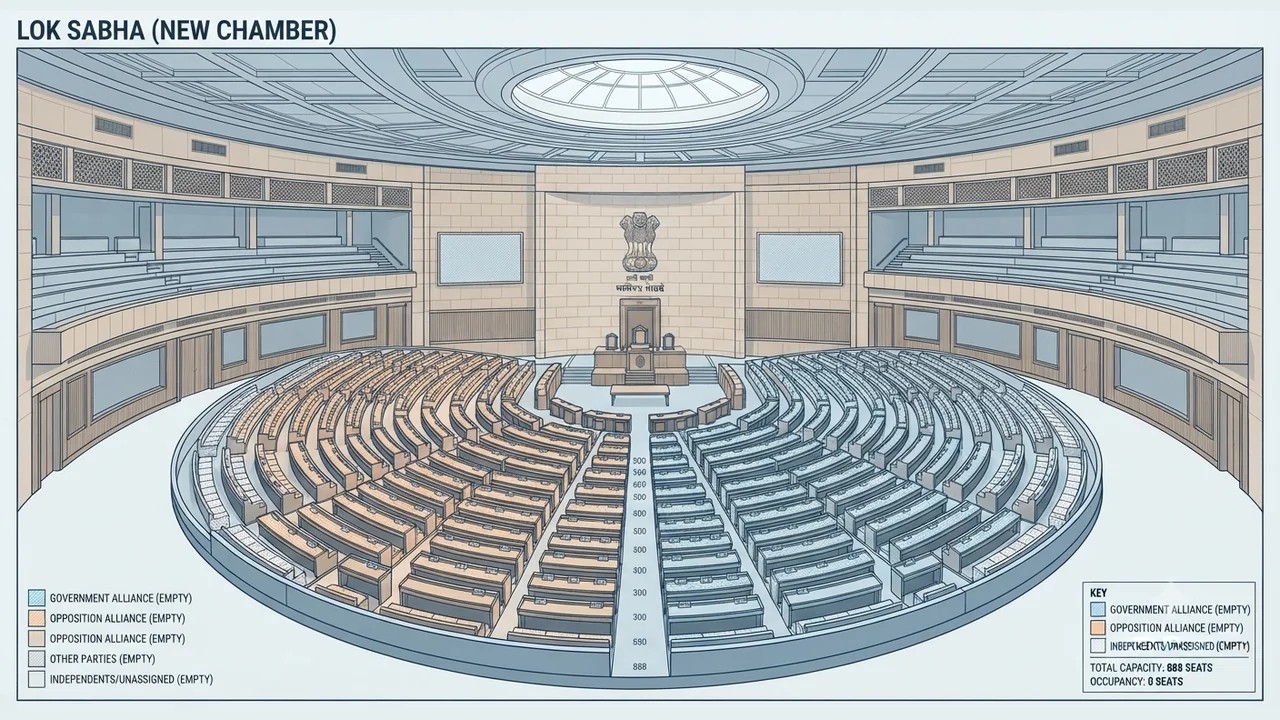
Google Gemini Representative Image
The Union Cabinet has approved a revised constitutional amendment proposal linking women’s reservation with a fresh delimitation exercise, paving the way for a significant increase in Lok Sabha seats while retaining the existing balance of representation among states until 2051.
KHABAR 365 NEWS NETWORK
NEW DELHI: In a move with far-reaching implications for India’s electoral system, the Union Cabinet has approved a revised constitutional amendment proposal aimed at implementing one-third reservation for women in Parliament and state legislatures through a fresh delimitation exercise.
The proposal seeks to expand the size of the Lok Sabha by 50 per cent across all states while preserving the current proportion of representation among them until 2051. The government is expected to introduce the legislation during the special sitting of Parliament beginning on November 30.
If enacted, the proposal would substantially increase the number of parliamentary constituencies across the country. The current strength of 543 elected Lok Sabha members could rise to around 815 seats allocated to states, while the overall strength of the House may increase further after accounting for Union Territories.
One of the most significant features of the proposal is its attempt to address concerns raised by several states over the impact of delimitation on political representation. Rather than redistributing seats among states on the basis of population growth, the framework proposes a uniform increase in seats, allowing every state to gain representation while retaining its existing share in the Lok Sabha.
The issue has long been a subject of debate, particularly among southern states, which have argued that a purely population-driven redistribution could reduce their relative influence in Parliament despite decades of progress in population control and human development indicators.
The proposed framework is also designed to facilitate the implementation of 33 per cent reservation for women in the Lok Sabha and state legislative assemblies before the 2029 general election. The women’s quota was provided for under the Nari Shakti Vandan Adhiniyam passed in 2023, but its implementation was linked to a future census and delimitation process.
According to reports, the revised proposal would redraw constituencies on the basis of an expanded House while maintaining the existing inter-state balance of representation. This is intended to ensure that no state loses its relative parliamentary strength as a result of the exercise.
The Centre had earlier attempted to secure parliamentary approval for a delimitation-linked women’s reservation package, but the proposal failed to obtain the special majority required for a constitutional amendment. The latest version incorporates significant changes aimed at building wider political consensus.
Political reactions have already begun to emerge, with several regional parties closely examining the proposal’s provisions relating to seat expansion and the continuation of the inter-state representation freeze until 2051.
Why the Proposal Matters
If approved by Parliament, the measure would lead to a larger Lok Sabha, create additional constituencies across the country and significantly increase opportunities for women’s representation in elected legislatures. It would also seek to balance two politically sensitive issues: expanding representation in Parliament and protecting states from losing their existing share of seats.
khabar 365 Takeaway
The Cabinet’s approval marks a major step in the government’s effort to implement women’s reservation while navigating the complexities of delimitation. The proposal is likely to trigger an intense political debate in Parliament, as parties weigh its impact on representation, federal balance and the future shape of India’s democracy.
Leave a Reply