
Tag: Climate Change

  • Earth’s Ice at the Edge: Scientists Warn the 1.5°C Threshold Could Change the Planet Forever

    Earth’s Ice at the Edge: Scientists Warn the 1.5°C Threshold Could Change the Planet Forever

    AI IMAGE


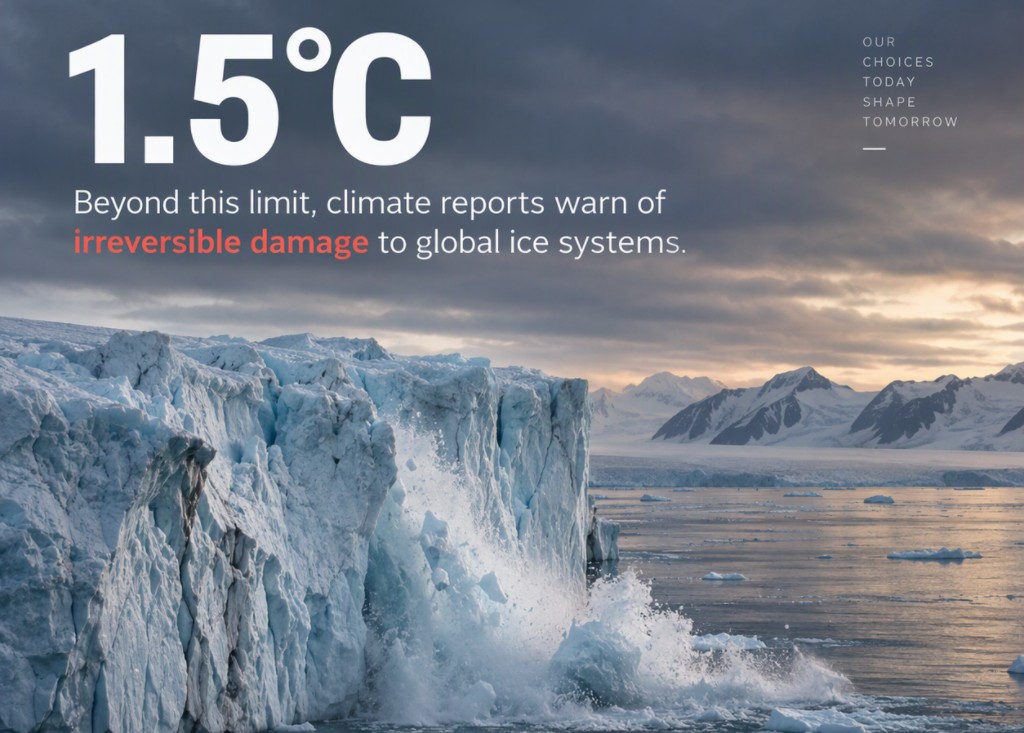
    Scientists warn that crossing the 1.5°C global warming threshold could push glaciers and polar ice systems beyond a point of no return, increasing the risks of sea-level rise, water shortages and long-term climate disruption.


    KAHBAR 365 NEWS NETWORK

    GENEVA: The world’s glaciers, ice sheets and frozen landscapes may be approaching a critical tipping point, with scientists warning that surpassing the 1.5°C global warming threshold could unleash changes that cannot be reversed within human lifetimes.

    For decades, the planet’s frozen regions have functioned as Earth’s natural cooling system, reflecting sunlight, regulating temperatures and storing vast quantities of freshwater. Today, rising temperatures are accelerating the loss of ice from mountain glaciers, the Arctic and Antarctica at a pace that has alarmed climate experts.

    Researchers caution that once certain ice systems begin to destabilise, the process may continue for centuries, even if global temperatures eventually stabilise. The result could be rising sea levels, shrinking freshwater reserves and increasingly unpredictable weather patterns across the globe.

    The consequences extend far beyond environmental concerns. Millions of people depend on glacier-fed rivers for drinking water, agriculture and energy generation. As those frozen reservoirs diminish, pressure on food systems, water security and infrastructure is expected to intensify.

    Scientists say every fraction of a degree now matters. The difference between keeping warming below 1.5°C and exceeding it could determine how much of the world’s ice survives for future generations and how severe the impacts become for coastal communities.

    The warning arrives as nations continue to grapple with the challenge of balancing economic growth, energy demand and climate commitments. Experts argue that the current decade will be decisive in determining the future of glaciers, polar regions and low-lying coastal areas worldwide.

    Why This Matters

    The story of melting ice is no longer about distant glaciers or remote polar landscapes. It is increasingly about the future of cities, agriculture, freshwater supplies and economies. What happens in the world’s frozen regions today will directly influence how future generations live tomorrow.


    365 TAKEAWAY

    The world’s glaciers are often called the planet’s early warning system. Their rapid retreat is a reminder that climate change is no longer a future threat but a present reality. The choices governments, industries and societies make in this decade could determine whether humanity slows the damage or simply learns to live with its consequences.
  • Floods in One State, Drought in Another: The Warning India Cannot Ignore

    Floods in One State, Drought in Another: The Warning India Cannot Ignore

    By Bhavana Pandey


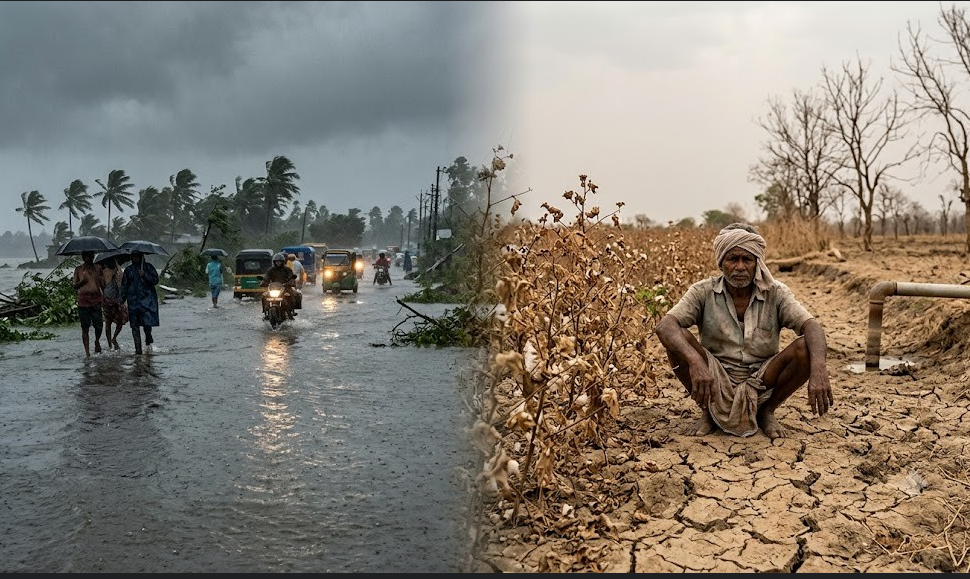
    While Cyclone Arnab has brought heavy rain, strong winds and flooding concerns to eastern India, Telangana has been declared drought-hit. These contrasting developments underscore a deeper challenge facing the country: climate extremes are becoming more frequent, more unpredictable and more costly.


    India today presents a striking contrast.

    In the east, Cyclone Arnab has brought heavy rainfall, strong winds and widespread disruption. In Telangana, farmers and communities are grappling with drought conditions caused by inadequate rainfall and shrinking water resources. One region is struggling with excess water, while another faces an acute shortage.

    At first glance, these appear to be unrelated events. In reality, they are connected by a larger trend that is becoming increasingly visible across the country.

    For generations, India’s economy and society have been shaped by predictable seasonal cycles. Farmers planned sowing patterns around the monsoon. Reservoirs were managed using historical rainfall trends. Cities expanded on the assumption that weather would behave much as it had in the past.

    That assumption no longer holds true.

    Across India, weather is becoming increasingly erratic. Torrential rainfall can occur within a few hours, overwhelming drainage systems and causing floods. At the same time, prolonged dry spells can leave fields parched and reservoirs depleted. Increasingly, the challenge is not simply too much rain or too little rain, but where, when and how that rain falls.

    The consequences go far beyond weather forecasts. Agriculture, water security, food production, public health and infrastructure are all affected. Farmers face uncertainty over crop planning. Cities struggle with waterlogging and traffic paralysis. Rural communities battle falling groundwater levels and crop losses.

    The real concern is that extreme weather events are no longer isolated incidents. They are becoming part of a broader pattern.

    India has made remarkable progress in disaster preparedness. Improved cyclone forecasting and evacuation systems have saved countless lives over the years. However, disaster response alone is no longer sufficient. The country now needs an equally strong focus on adaptation.

    Water conservation must become a national priority. Every district should strengthen rainwater harvesting, watershed development and groundwater recharge projects. Regions that receive excess rainfall should be equipped to store and utilize that water rather than allowing it to flow away.

    Agriculture must adapt to the new reality. Wider adoption of drought-resistant seeds, micro-irrigation systems, climate-resilient farming techniques and scientific weather advisories can help reduce risk for farmers. The future of Indian agriculture will depend not only on productivity but also on resilience.

    Urban India faces an equally urgent challenge. Rapid expansion, shrinking green spaces and inadequate drainage infrastructure have increased vulnerability to flooding. Future city planning must account for extreme rainfall events rather than relying on outdated climate assumptions.

    Technology also offers powerful solutions. Advanced forecasting systems, satellite monitoring, AI-driven weather analysis and real-time disaster alerts can help governments and communities respond more effectively. India already possesses considerable technological capability. The need now is to ensure these tools reach villages, cities and local administrations in a timely manner.

    Most importantly, climate resilience must be viewed not just as an environmental issue but as a development priority. The effects of climate extremes are felt in agriculture, healthcare, infrastructure, education and livelihoods.

    The lesson from today’s headlines is impossible to ignore. Floods in one state and drought in another are not isolated events. They are warning signs of a changing climate reality that demands long-term planning, smarter resource management and greater preparedness.


    365 Takeaway

    Cyclones, floods, droughts and heatwaves are no longer rare disruptions. They are increasingly becoming defining challenges of modern India. The country’s future preparedness will depend not only on how effectively it responds to disasters, but on how intelligently it prepares for them before they occur.


  • Telangana Declared Drought-Hit as Water Scarcity Concerns Deepen

    Telangana Declared Drought-Hit as Water Scarcity Concerns Deepen

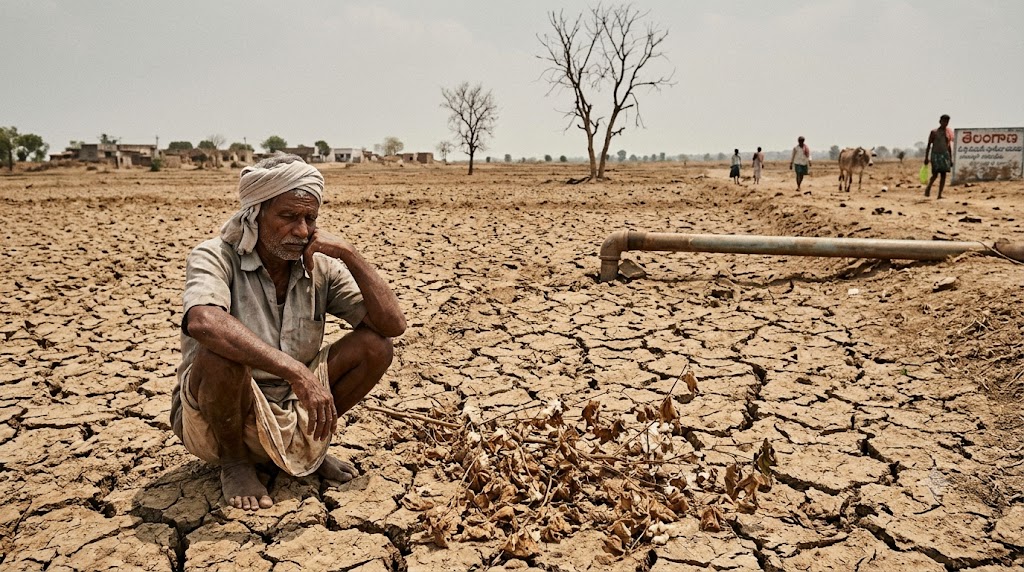
    Telangana has been declared drought-hit following concerns over deficient rainfall, falling water levels and mounting pressure on agriculture. The development has intensified worries about crop losses, irrigation challenges and rural livelihoods.

    KHABAR365 NEWS NETWORK

    Telangana has officially been declared a drought-affected state, becoming one of the Indian states grappling with severe water stress and rainfall shortages this year.

    The declaration comes amid growing concerns over the impact of inadequate rainfall on agriculture, groundwater reserves and drinking water supplies across several districts. Farmers in many parts of the state have reported challenges in sustaining crops due to insufficient moisture and declining irrigation resources.

    Agriculture remains a key pillar of Telangana’s economy, and prolonged dry conditions could affect crop yields, farm incomes and rural employment. Water-intensive crops are particularly vulnerable as reservoirs, lakes and groundwater sources face increasing pressure.

    State authorities are expected to monitor conditions closely and implement relief measures aimed at supporting affected farmers and ensuring adequate water availability. Government agencies are also reviewing irrigation requirements and resource management strategies to mitigate the impact of the drought.

    Experts warn that recurring drought conditions highlight the need for improved water conservation practices, efficient irrigation systems and climate-resilient agricultural planning. The situation has also renewed discussions on sustainable water management as changing weather patterns continue to affect several regions of the country.

    The drought declaration underscores the broader challenge of balancing agricultural needs with long-term water security in an era of increasing climate variability.


    The drought situation in Telangana is a reminder of the growing vulnerability of agriculture to erratic weather patterns. Effective water management, farmer support measures and climate-resilient farming practices will be crucial in minimizing the impact on livelihoods and food production.

error: Content is protected !!