
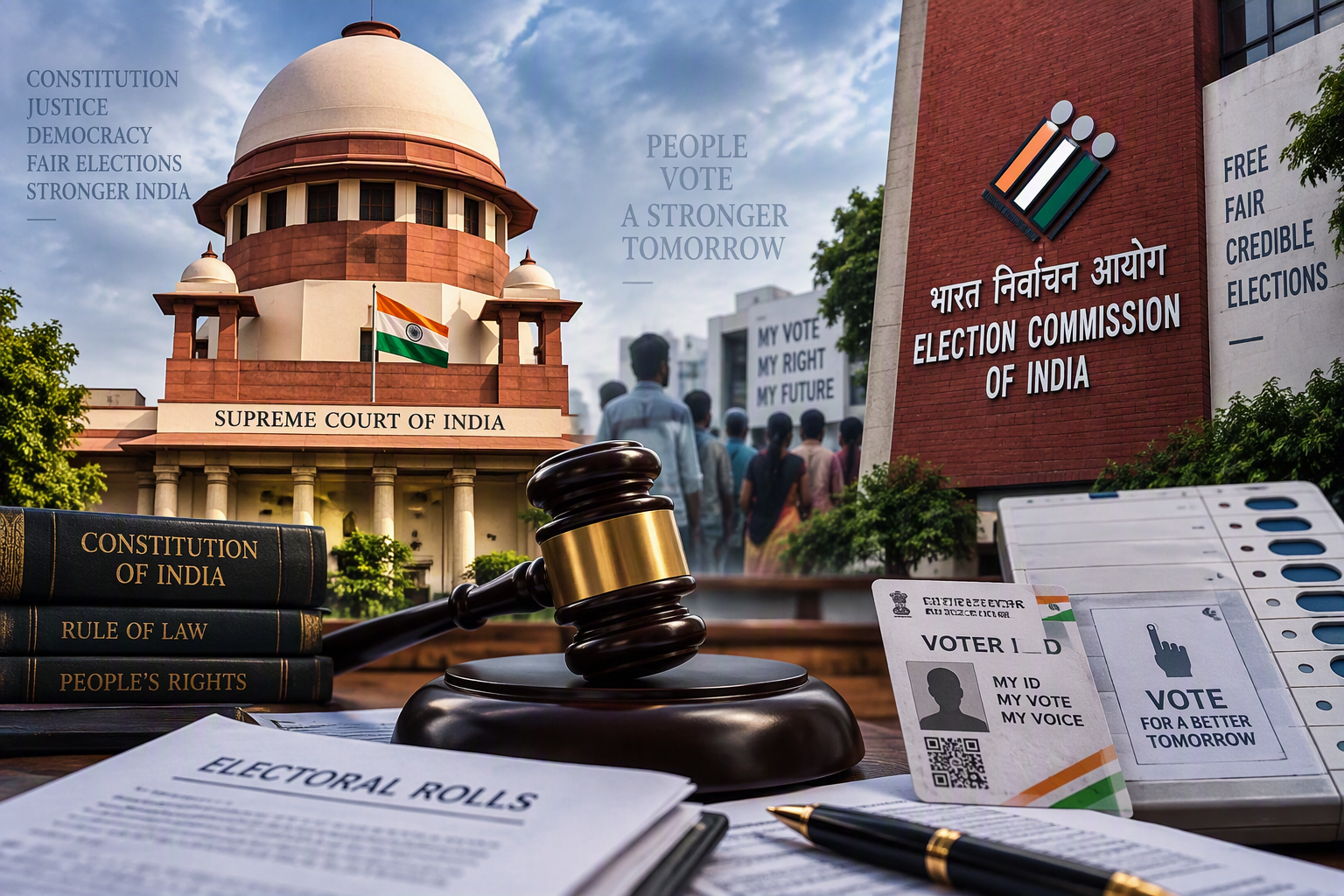
The Supreme Court has deferred hearing on petitions challenging the functioning of the Election Commission of India and allegations surrounding the Special Intensive Revision of electoral rolls. The case has gained prominence due to demands for the removal of Chief Election Commissioner Gyanesh Kumar, with petitioners questioning the commission’s decision-making process. While the Election Commission maintains that all decisions were taken unanimously, the court has sought further submissions before taking up the matter again at a later date.
khabar365 news network
New Delhi: The Supreme Court on Tuesday deferred further hearing on petitions questioning the functioning of the Election Commission of India (ECI) and the conduct of the Special Intensive Revision (SIR) of electoral rolls.
A bench headed by the Chief Justice granted petitioners time to respond to the Election Commission’s affidavit and directed them to file their rejoinders within ten days. The poll body has also been given liberty to submit additional material, if required, before the next hearing.
The petitions raise concerns over the decision-making process within the Election Commission, with allegations that certain actions related to electoral roll revision were taken without following the established procedure of collective decision-making. The Election Commission has rejected these claims, maintaining that all key decisions were taken unanimously by its members.
The matter has drawn significant attention as some petitioners have sought the removal of Chief Election Commissioner Gyanesh Kumar, alleging that several decisions were taken unilaterally. The Election Commission has denied the allegations and defended the legality of its actions.
During the proceedings, the court also took note of a fresh petition raising objections related to voter registration procedures and agreed to examine the matter along with the pending cases.
The Supreme Court did not pass any interim orders and will take up the matter at a later date after receiving further submissions from the parties.
365 Takeaway
The case has emerged as an important legal challenge concerning the Election Commission’s functioning and the process of electoral roll revision. While both sides remain firmly at odds over the allegations, the Supreme Court’s eventual ruling could have far-reaching implications for election administration and decision-making within one of India’s key constitutional institutions.