
Tag: On This Day

  • The Night America Thought the Martians Had Landed

    The Night America Thought the Martians Had Landed


    On a chilly October evening in 1938, a routine radio broadcast transformed into one of history’s most astonishing media moments. As “breaking news” reports warned of strange objects falling from the sky and terrifying creatures emerging from them, thousands of listeners believed a Martian invasion had begun. What followed was a night of confusion, fear, and fascination that still serves as a powerful lesson in the age of viral misinformation.


    Khabar 365 Offbeat Desk | October 30 Special

    What would you do if a breaking news bulletin suddenly announced that aliens had landed on Earth?

    Switch on social media? Call friends? Check a news website?

    In 1938, none of those options existed.

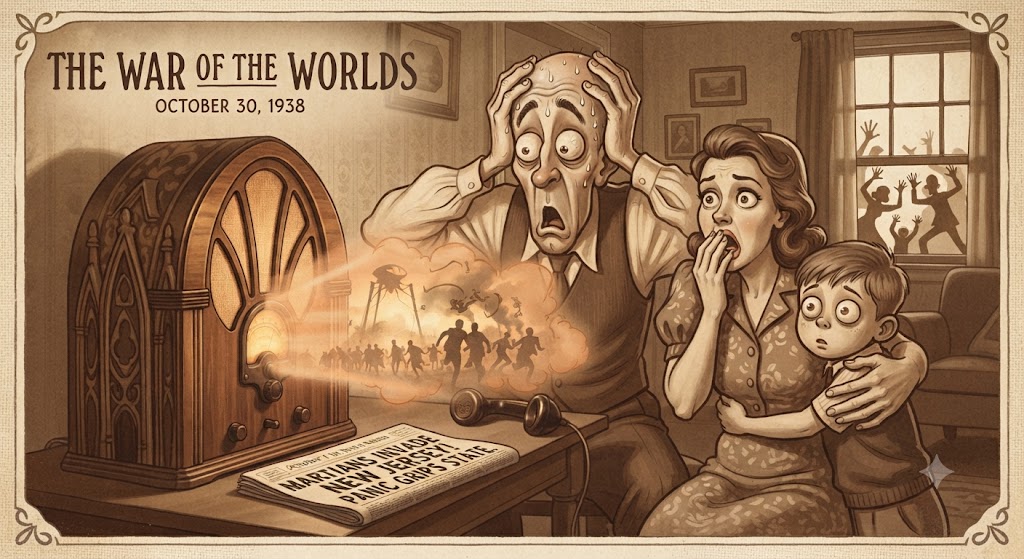
    Yet on the evening of October 30, 1938, panic, confusion, and disbelief spread across parts of the United States when thousands of radio listeners became convinced that Earth was under attack from Mars.

    The culprit was not a spaceship.

    It was a radio drama.

    A young 23-year-old actor and director named Orson Welles had adapted H.G. Wells’ famous science-fiction novel The War of the Worlds for radio. Instead of presenting it as a traditional play, Welles chose a far more daring format. The programme interrupted music broadcasts with increasingly alarming “live news updates” about strange explosions on Mars, a mysterious object crashing in New Jersey, and terrifying creatures emerging from the wreckage.

    To listeners tuning in late, it sounded frighteningly real.

    The bulletins became more dramatic with every passing minute. Reporters described giant war machines advancing across the countryside. Authorities appeared overwhelmed. The so-called Martians seemed unstoppable.

    Some listeners rushed outdoors. Others telephoned police stations, newspapers, and radio networks seeking confirmation. Families gathered around radios in fear, trying to understand whether the unbelievable was actually happening.

    Of course, it was all fiction.

    But for one extraordinary night, fiction proved powerful enough to compete with reality.

    The broadcast instantly became one of the most famous moments in media history. Ironically, historians later argued that reports of nationwide hysteria may themselves have been somewhat exaggerated. Yet the legend only grew stronger over time, turning the programme into a case study in the power of mass communication.

    More than eight decades later, the story feels surprisingly modern.

    Long before fake news, viral posts, deepfakes and AI-generated content, a simple radio broadcast demonstrated how quickly people can accept dramatic information when it arrives in a believable format. No city was destroyed. No spaceship ever landed. No Martian ever set foot on Earth. Yet the broadcast achieved something remarkable: it invaded the human imagination.

    The Martians never came, but for a few unforgettable hours, fear travelled faster than facts.

    That is perhaps why the tale continues to fascinate the world today. The technology has changed from crackling radios to smartphones and social media feeds, but the challenge remains exactly the same: separating truth from what merely sounds believable. The greatest alien invasion in history never happened. Its warning, however, may be more relevant today than ever before.


    365 Takeaway

    Before the internet, before viral posts and long before artificial intelligence entered everyday life, a radio drama demonstrated the extraordinary power of information. The story of the 1938 “Martian invasion” remains a timeless reminder that the more shocking a claim appears, the more important it is to verify it before believing or sharing it.
  • The World’s Most Famous Sapphire Was Once Stolen Through an Open Window

    The World’s Most Famous Sapphire Was Once Stolen Through an Open Window

    On this day in 1964, a surfer-turned-thief pulled off one of the most incredible jewel robberies in history.

    KHABAR365 OFFBEAT DESK

    Imagine walking into a museum and finding that one of the world’s most famous gemstones had vanished overnight.

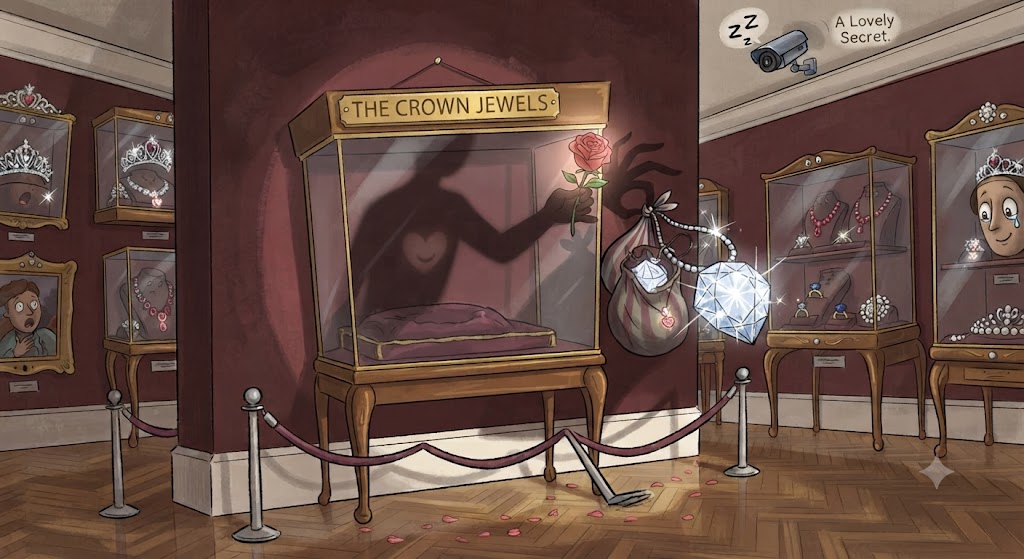
    That’s exactly what happened on October 29, 1964, when former surfing champion Jack Murphy, better known as “Murph the Surf,” carried out a daring theft that would be remembered as the “Jewel Heist of the Century.”

    The target was New York’s American Museum of Natural History, home to some of the world’s most valuable gems. Among them was the legendary Star of India, a 563-carat sapphire regarded as one of the largest and most famous star sapphires ever discovered.

    What made the crime astonishing was not the value of the gems, but the simplicity of the plan.

    Murphy and his accomplices reportedly discovered that parts of the museum’s security system were inadequate and that access to the building was far easier than anyone imagined. Under the cover of darkness, they entered the museum, smashed display cases and walked away with some of its most prized treasures.

    By morning, headlines across America were asking the same question: How could a thief steal priceless gems from a world-renowned museum?

    The answer was both shocking and embarrassing. The museum’s greatest weakness was not a master criminal or sophisticated technology. It was a lapse in basic security.

    Although police recovered most of the stolen gems within days and arrested the thieves soon afterward, the story has never lost its appeal. More than six decades later, the Murph the Surf heist remains one of history’s most fascinating examples of how an ordinary oversight can lead to an extraordinary crime.


    Did You Know?

    🔹 The Star of India weighs an astonishing 563 carats.
    🔹 The sapphire is estimated to be nearly two billion years old.
    🔹 The 1964 theft inspired books, documentaries and even a Hollywood film.


    Why You’ll Like This Story

    Some crimes are remembered for their violence. Others for their complexity. The Murph the Surf heist is remembered because it seems almost unbelievable: one of the world’s most famous gemstones was stolen not with cutting-edge technology, but through a security gap that should never have existed.


    365 Takeaway

    History’s biggest losses often begin with the smallest mistakes. The story of Murph the Surf is a timeless reminder that whether it’s a priceless sapphire, a bank vault or a computer network, security is only as strong as its weakest link.


  • On This Day: New York City’s First Subway Ride Changed Urban Travel Forever

    On This Day: New York City’s First Subway Ride Changed Urban Travel Forever

    On October 27, 1904, New York City inaugurated its first subway line, a breakthrough in urban transportation that changed the way people moved through the city. Operating across 28 stations and connecting Lower Manhattan to Harlem, the new underground railway laid the foundation for one of the world’s most influential transit systems.

    khabar365 news network

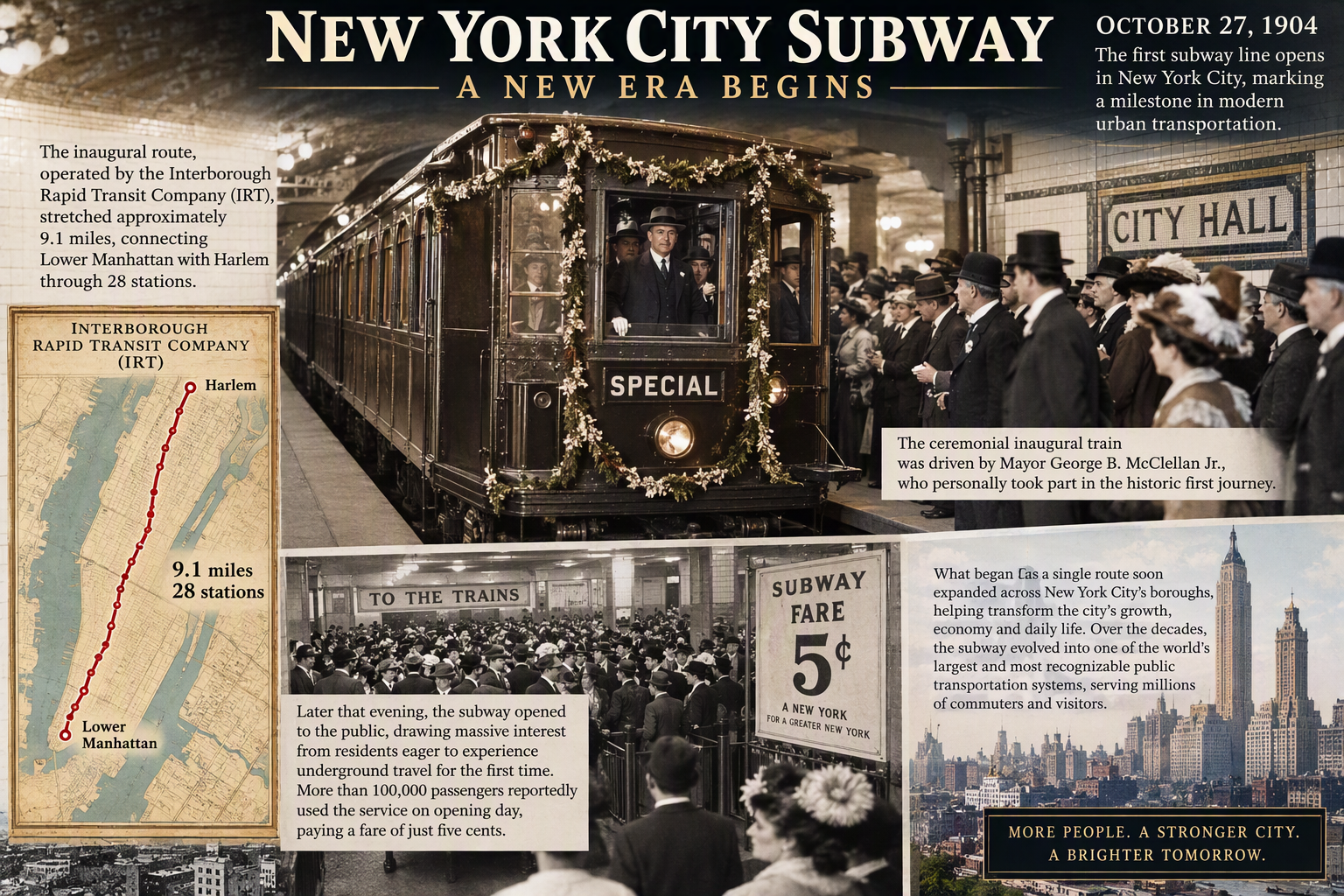
    New York: On October 27, 1904, New York City opened its first subway line, marking a milestone in the evolution of modern urban transportation. The inaugural route, operated by the Interborough Rapid Transit Company (IRT), stretched approximately 9.1 miles and connected Lower Manhattan with Harlem through 28 stations.

    The launch represented a major solution to the growing congestion that had begun to strain the city’s streets at the turn of the 20th century. Designed to move large numbers of people quickly and efficiently, the underground railway introduced a new era of mass transit.

    The ceremonial inaugural train was driven by Mayor George B. McClellan Jr., who personally took part in the historic first journey. Later that evening, the subway opened to the public, drawing massive interest from residents eager to experience underground travel for the first time. More than 100,000 passengers reportedly used the service on opening day, paying a fare of just five cents.

    What began as a single route soon expanded across New York City’s boroughs, helping transform the city’s growth, economy and daily life. Over the decades, the subway evolved into one of the world’s largest and most recognizable public transportation systems, serving millions of commuters and visitors.


    Did You Know?

    The original New York City subway line opened with 28 stations and quickly became a model for large-scale urban transit systems around the world. On its first day of public operation, more than 100,000 passengers rode the subway for a fare of just five cents, highlighting the city’s enthusiasm for the new mode of transport.


    365 Takeaway

    The opening of New York City’s first subway line in 1904 was more than a transportation achievement. It demonstrated how infrastructure can reshape a city’s future, influence urban development and improve mobility for generations. More than a century later, the subway remains a symbol of innovation, connectivity and modern city life.

error: Content is protected !!