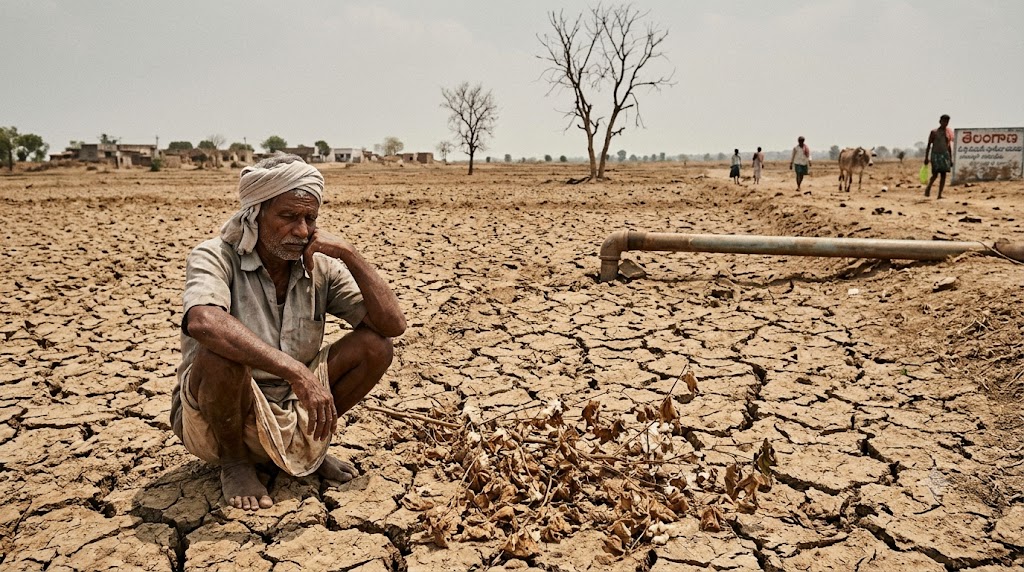
Telangana has been declared drought-hit following concerns over deficient rainfall, falling water levels and mounting pressure on agriculture. The development has intensified worries about crop losses, irrigation challenges and rural livelihoods.
KHABAR365 NEWS NETWORK
Telangana has officially been declared a drought-affected state, becoming one of the Indian states grappling with severe water stress and rainfall shortages this year.
The declaration comes amid growing concerns over the impact of inadequate rainfall on agriculture, groundwater reserves and drinking water supplies across several districts. Farmers in many parts of the state have reported challenges in sustaining crops due to insufficient moisture and declining irrigation resources.
Agriculture remains a key pillar of Telangana’s economy, and prolonged dry conditions could affect crop yields, farm incomes and rural employment. Water-intensive crops are particularly vulnerable as reservoirs, lakes and groundwater sources face increasing pressure.
State authorities are expected to monitor conditions closely and implement relief measures aimed at supporting affected farmers and ensuring adequate water availability. Government agencies are also reviewing irrigation requirements and resource management strategies to mitigate the impact of the drought.
Experts warn that recurring drought conditions highlight the need for improved water conservation practices, efficient irrigation systems and climate-resilient agricultural planning. The situation has also renewed discussions on sustainable water management as changing weather patterns continue to affect several regions of the country.
The drought declaration underscores the broader challenge of balancing agricultural needs with long-term water security in an era of increasing climate variability.
Khabar365 Takeaway
The drought situation in Telangana is a reminder of the growing vulnerability of agriculture to erratic weather patterns. Effective water management, farmer support measures and climate-resilient farming practices will be crucial in minimizing the impact on livelihoods and food production.