
Google Gemini Representative Image
The aftermath of the Bailadila dump collapse has entered a new phase, with the Forest Department initiating legal action and technical experts joining efforts to determine the cause and environmental impact of the incident.
KHABAR 365 NEWS NETWORK
RAIPUR/DANTEWADA: The Chhattisgarh Forest Department has registered a Preliminary Offence Report (POR) following the collapse of an overburden dump at NMDC’s Deposit-14 mine in the Bailadila hill range of Dantewada district, intensifying scrutiny of one of the state’s most significant recent mining-related incidents.
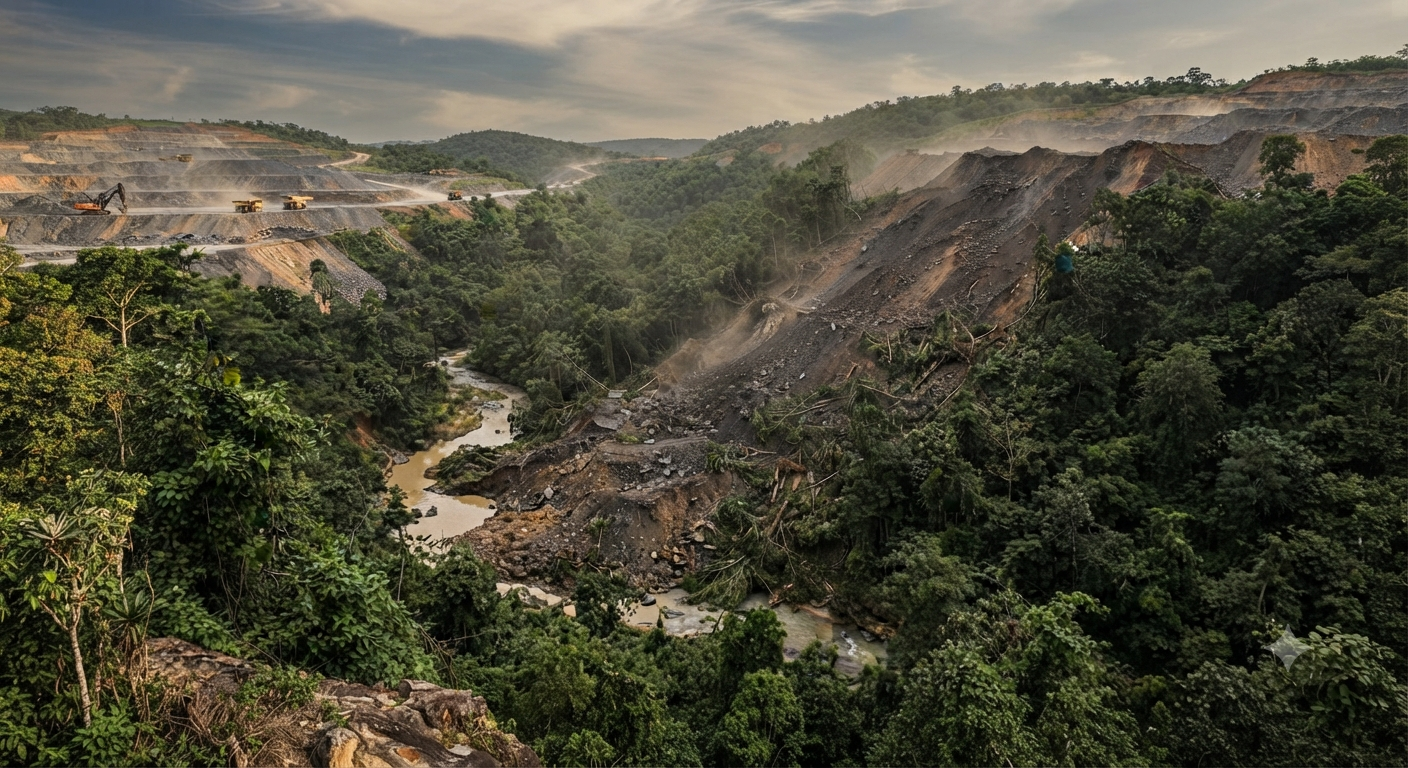
The incident occurred on November 18 when a portion of an old waste dump gave way, sending mud, rock and debris down forested slopes in the Kirandul region. While no casualties were reported, the collapse raised concerns about its impact on surrounding forests, natural drainage channels and nearby communities.
Forest officials have begun a detailed assessment of the affected area, with preliminary estimates suggesting that between 25 and 30 hectares of forest land may have suffered damage. Teams are conducting field surveys and sampling exercises to determine the extent of ecological loss and the number of trees impacted by the debris flow.
Authorities have indicated that further action will depend on the findings of the investigation, with the assessment expected to play a key role in determining responsibility and any compensatory measures that may be required.
The development has shifted attention from the immediate collapse to broader questions surrounding environmental safeguards, waste-dump management and mining practices in the ecologically sensitive Bailadila hills, one of India’s most important iron ore-producing regions.
A scientific investigation is also underway to establish the precise cause of the incident. Technical experts are expected to examine geological conditions, slope stability and other factors that may have contributed to the collapse. Advanced surveys, including drone-based mapping and ground studies, are being undertaken as part of the assessment process.
NMDC, meanwhile, has maintained that the incident resulted from geological activity outside its mining lease area. In a statement posted on its official X handle on November 21, the company said lateral movement of geological strata in a western valley of the Bailadila mountain range, around two kilometres from its lease boundary, led to partial subsidence in the waste dump at Deposit-14.
The company stated that the waste dump had remained stable for nearly two decades and had been reinforced through scientific measures, including terracing, garland drains, plantation of local species and the construction of buttress walls. According to NMDC, the debris carried downhill largely consisted of natural soil and mud, which it said indicated the possible presence of a subsurface stream in the affected area.
Referring to the same November 21 post on X, NMDC said it was supporting the local administration by facilitating studies by geotechnical experts from IIT Bombay and IIT Roorkee to determine the exact cause of the subsidence and identify measures to prevent similar incidents in the future. The company also said there had been no loss of life or damage to private property and that it was cooperating with authorities to ensure the safety of residents and provide logistical support in the affected area.
The findings of the ongoing environmental assessment and scientific study are expected to determine the next course of action, including possible accountability measures and restoration efforts in the affected region.
khabar 365 Takeaway
The focus of the Bailadila incident has moved well beyond the initial collapse. With a forest case registered, environmental assessments underway and technical experts examining the causes of the incident, the coming weeks are likely to shape both accountability and future safeguards in one of Chhattisgarh’s most sensitive mining zones.