
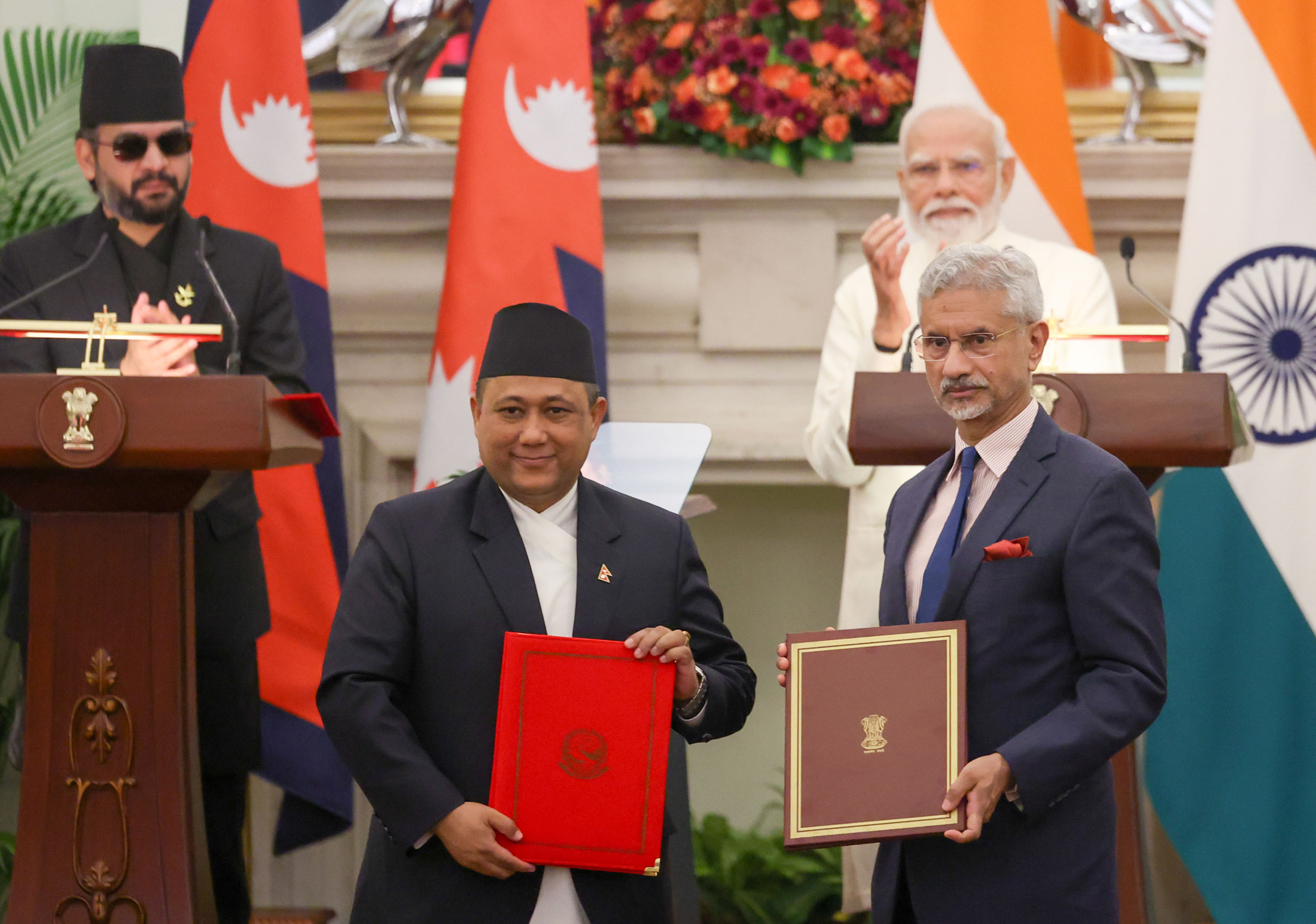
Nepal Prime Minister Balendra Shah’s two-day India visit concluded with a ₹15,000-crore development commitment, a new Ayodhya-Janakpur rail service and a renewed push to strengthen one of South Asia’s most important bilateral partnerships.
khabar 365 news network
New Delhi | November 23: Nepal Prime Minister Balendra Shah’s two-day visit to India concl`uded with a clear focus on development, connectivity and economic cooperation, producing a series of tangible outcomes that both sides hope will strengthen one of South Asia’s closest bilateral relationships.
The visit’s most significant outcome was India’s announcement of a development assistance package worth approximately ₹15,000 crore for Nepal. Alongside the financial commitment, the two countries signalled their intent to deepen cooperation in infrastructure, connectivity and regional development projects that can contribute to Nepal’s long-term growth.
A major highlight was the inauguration of the Saryu-Kamala Express, a weekly rail service connecting Ayodhya in Uttar Pradesh with Janakpur Dham in Nepal. The service is expected to improve cross-border mobility, encourage pilgrimage tourism and bring communities on both sides of the border closer together through easier and more affordable travel.
Focus on Practical Cooperation
Unlike visits dominated by ceremonial engagements and broad diplomatic statements, this visit centred on concrete initiatives. Discussions between the two leaders reflected a shared emphasis on translating political goodwill into projects capable of delivering measurable benefits for citizens.
Connectivity emerged as a recurring theme throughout the visit. Better transport links, enhanced infrastructure and smoother movement of people are increasingly viewed as essential to unlocking the economic potential of the India-Nepal partnership.
The two neighbours share an open border of nearly 1,850 kilometres and maintain extensive cultural, social and economic ties. India remains Nepal’s largest trading partner and a key source of development assistance, making close cooperation important for both countries.
Strengthening a Unique Relationship
Relations between India and Nepal are unlike most bilateral partnerships in the region. Millions of people cross the border every year for trade, employment, education, tourism and family connections. Shared religious traditions, historical ties and geographic proximity continue to shape interactions at every level.
Against this backdrop, the outcomes of the visit assume greater significance. The emphasis on development support and connectivity indicates a desire to keep the relationship focused on areas where cooperation can produce visible results.
For Nepal, the visit brought fresh commitments on development and infrastructure. For India, it offered an opportunity to reaffirm its role as a trusted partner while reinforcing links with an important neighbour at the heart of the Himalayan region.
Looking Beyond Diplomacy
While official visits are often judged by the agreements signed and announcements made, the longer-term significance of this visit will depend on how efficiently the commitments are implemented.
The development package and the new rail service have the potential to become visible symbols of cooperation. However, their success will ultimately be measured by the economic opportunities they create and the benefits they deliver to people on both sides of the border.
Khabar 365 Takeaway
The biggest message from Prime Minister Balendra Shah’s India visit is that New Delhi and Kathmandu are seeking to move beyond symbolism and place greater emphasis on outcomes. From development assistance to cross-border connectivity, the visit reinforced the idea that the future of India-Nepal relations will be defined not by diplomatic gestures alone, but by projects that improve lives, strengthen economic links and bring the two neighbours closer together.